Rubrica Cose che non sai sui Retro Giochi

  • Autore discussione Autore discussione Strider
  • Data d'inizio Data d'inizio
Un nome di peso

5JxDVEi.jpeg


The main character, Akuji, is voiced by famous actor Richard Roundtree.
 
latest

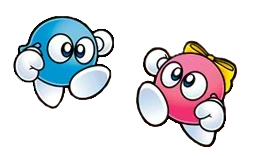
Lololo e Lalala, recentemente riapparsi anche in Kirby Air Riders, esordirono in Adventures of Lolo, un puzzle game NES uscito nel 1989 che ha avuto diversi seguiti, tra cui un capitolo Game Boy. Ma la cosa strana è che questi due personaggi sono poi apparsi come boss in Kirby's DreamLand e altri titoli di Kirby, il motivo è che entrambe le serie sono di HAL.
 
Starter differenti:

11382.png


Pokemon Oro/Argento/Cristallo

Gold and Silver originally had a completely different looking starter trio. They were Happa (grass), Kurusu (water) and Honōguma (fire). The grass starter's design remained somewhat similar in the final release, becoming Chikorita.
 
Cambio senza senso

1p59utP.jpeg


The Japanese version saves to the game cartridge, but in the international version you need to get a Controller Pak to save the game.
 
Un po’ horror, un po’ rpg

qITIADt.jpeg


Elvira II: The Jaws of Cerberus (1991–1992) is a horror role-playing game developed by Horrorsoft and published by Accolade, notable for its early use of first-person, point-and-click dungeon crawling and intense horror themes
 
Passione Egitto:

7216.jpg


Lunar 2: Eternal Blue

Though never stated in the game, Zophar's name is short for "Zone Pharaoh", as indicated by the Lunar I & II Official Artbook. This explains the Egyptian motif of the murals seen in the opening credits.
 
Payback

Cbs9zJu.jpeg


Because Alien Logic did not sell well, multiple investors were given part of the rights to Skyrealms of Jorune as a form of payback.
 
A clone
RdUAbIc.jpeg


Director and designer Ian Verchere was a Metroid fan. He purposely designed The Divide to be a Metroid clone, knowing there could never be an official Metroid game for the PlayStation because it was a Nintendo serie
 
Censure e modifiche:

5345.png


Bravely Default

The Western releases of the game were censored, with several outfits made less revealing and the ages of some characters were raised from 15 to 18.
 
Controversia

EZSgZ8q.jpeg


The game gained a significant amount of controversy with its promotional poster, which featured a bloody faced DJ Sara Cox. This was suspected by many to be depicting a drug overdose, as the game was considered part of the clubbing culture of the UK, which included a lot of illegal drug abuse, such as with ecstasy. Many politicians believed that the large "E" in the WipEout logo was in fact a reference to this culture.
 
Different experience

m2gvob2.jpeg


In a two-player game, the second player controls Ralph the gunman. Ralph is unable to deflect bullets (though he is also able to dodge and roll) or engage in melee combat in the same manner as Gojiro, but is instead equipped with a gun that allows long-range attacks. He also has the ability to perform punches that instantly floor an enemy and deal a small amount of damage. Two additional guns can be unlocked for Ralph through beating the game, increasing his usefulness as a backup player.
 
Different system

kpujASH.jpeg


The game is streamlined in a few ways compared to other RPGs of the era. There are no experience points or money to be earned from combat; the player's party instead levels whenever an area's boss is defeated, and items like consumables and equipment need to be found on the field by exploring. The player controls heroic warrior Pyne throughout the entire game, but the rest of the party changes as Pyne travels to each elementally-themed region of the world.
 
Canzoni famose:

4780.jpg


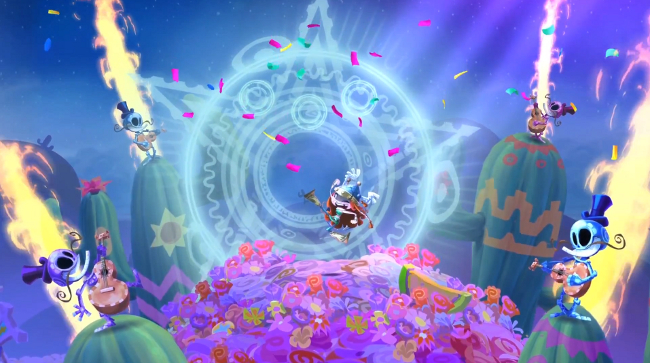
Rayman Legends

Four of the six rhythm levels feature covers of licensed music:
• Castle Rock - "Black Betty" by Ram Jam
• Mariachi Madness - "Eye of the Tiger" by Survivor
• Gloo Gloo - "Woo Hoo" by The 5.6.7.8s
• Dragon Slayer - "Antisocial" by Trust

Of the remaining two, "Orchestral Chaos" features an original composition, and "Grannies World Tour" is a remix of the "The Land of the Livid Dead" theme from Rayman Origins.
 
Censura

DdVMIvC.jpeg


Originally when Kid Dracula is flying in the intro sequence, he will pass a part of a church with a cross on the very top of it and a bell ringing. The tower was altered in the International version to not give any resemblances to religion. Despite this change, you can still hear the bell ringing even though it was removed.
 
Il primo incontro non si scorda mai:

13601.png


Super Mario Galaxy 2

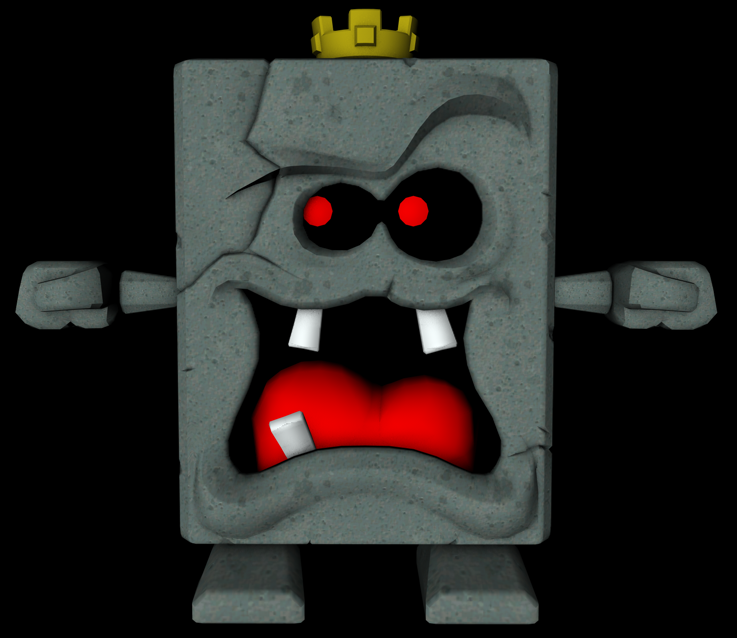
The Whomp King, the boss of the Throwback Galaxy, will recite his original speech from his first encounter with Mario at Whomp's Fortress in Super Mario 64. If you lose the fight and then try again, he will start to recite the speech again, and then stop himself declaring he's tired of it. Excluding Bowser and Bowser Jr., the Whomp King is the only standard boss in the game with dialogue. When you deal the final blow to the Whomp King, he makes a unique face that cannot be seen normally because he is lying down when defeated.
 
Quando ogni nome è bello


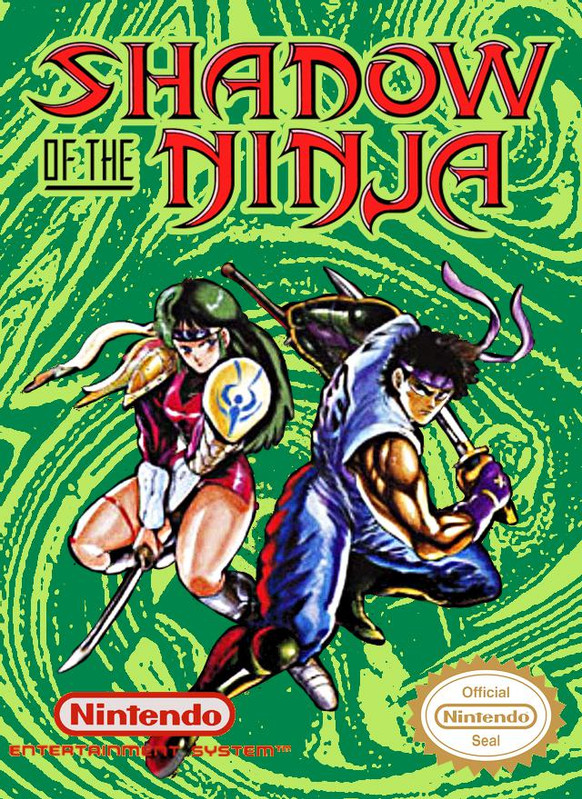
In Europa è stato distribuito con il nome di Blue Shadow.
In USA appunto Shadow of the Ninja, e in JAP con Yami no Shigotonin Kage (闇の仕事人 KAGE? lett. "Kage il bracciante oscuro").
 
Ultima modifica:
Pubblicità
Pubblicità
Indietro
Top