Rubrica Cose che non sai sui Retro Giochi

  • Autore discussione Autore discussione Strider
  • Data d'inizio Data d'inizio
Loghi differenti:

maxresdefault.jpg


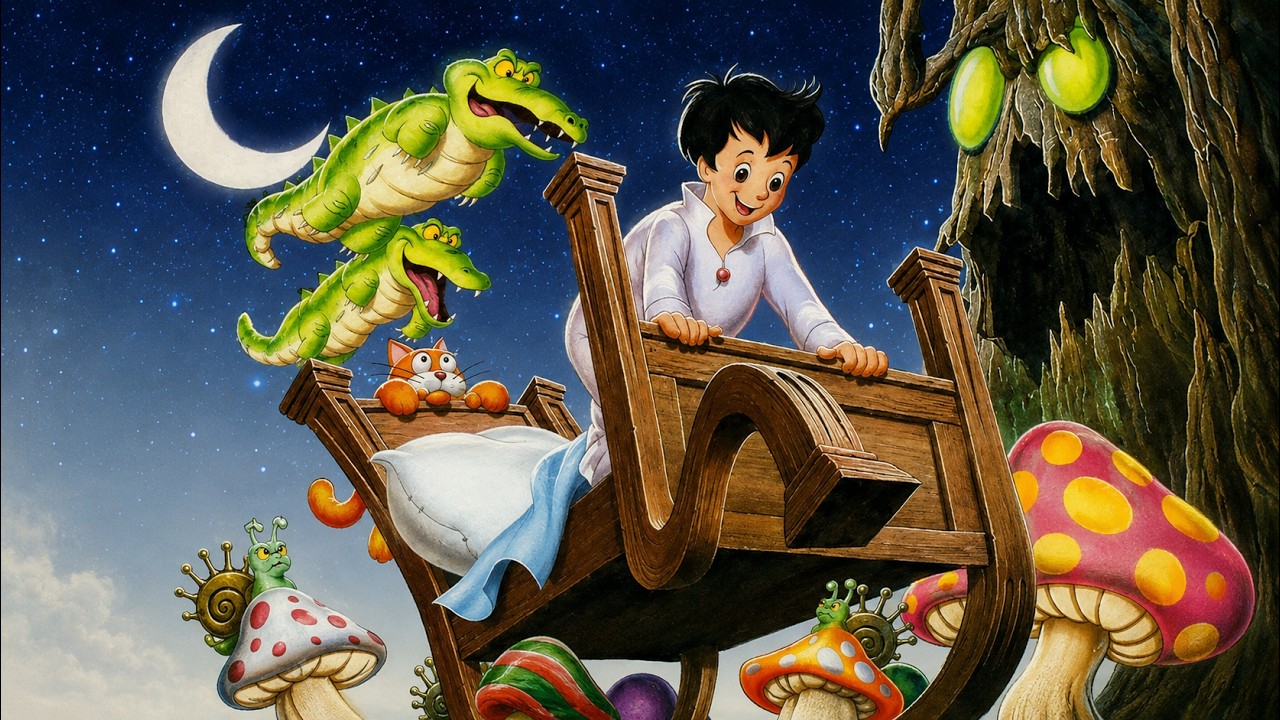
Little Nemo: The Dream Master

The Japanese title screen is based on the logo used for the original Japanese release of the 1989 film "Little Nemo: Adventures in Slumberland", which the game is based on. The international logo is completely original and puts more emphasis on the game's subtitle. Although Nemo himself was removed from the title screen, the graphic can still be found in the data of the North American and European versions. Additionally, some larger stars were added to the background and the corner decorations at the bottom of the screen were removed to fit extra copyright information.
 
Fonti di ispirazione:

The_Last_Blade_arcade_flyer.jpg


The Last Blade

Shinnosuke Kagami was modeled after the characters Hiko Seijuro from Rurouni Kenshin, and Shinobu Sensui from Yu Yu Hakusho. The visual design was inspired by the former, and the overall character was based on the latter.
 
Secret origin

IGu0f3K.jpeg


According to the game's character designer Hiroyuki Nara, the character model for Dante was initially built by repurposing backup data for Trish from Devil May Cry 2.
 
Titoli diversi
Questa volta preferisco il titolo eu.
Che gioco che è la versione DC.
Uno di quei titoli belli, nonostante i suoi evidenti difetti. Che in questo caso visti da alcuni possono diventare pregi, come per la saga di NMH.
Io appartengo agli alcuni obviously.
 
Libera interpretazione:

Vagrantstorybox.jpg


Vagrant Story

In an interview with game's producer, writer and director Yasumi Matsuno, found within the game's Ultimania guide book, he was asked what kind of story did he want to tell in the game. He responded:

"With Final Fantasy Tactics, I think I really wanted to create my own version of Final Fantasy. I saw Final Fantasy as a kind of “morality tale adventure story.” For Vagrant Story, my first concept was to have two hours worth of event scenes strewn throughout the game. My image wasn’t so much of a big Hollywood movie, as it was a two-hour Tuesday evening suspense drama. I wasn’t thinking we’d make something with all these heavy and pretentious themes… I wanted to make it more lighthearted and easy to digest."

"There was one thing I knew I didn’t want. Even though we were always going to tell a complete story, I didn’t want to draw the conclusion for players. I wanted to make a game where, from all the different experiences you have as the player/protagonist, you create the conclusion—what it all means—for yourself. I thought we’d try a more fragmentary approach this time, where players are simply presented with bits of information and they have to weave it together into a narrative themselves. In that sense, the question of whether Ashley’s memories are true or not—that is something I didn’t want to give an answer to, I just wanted to tell the tale."
 
Only in the US

bjcA9HF.jpeg


Il titolo cambia a seconda della regione. In Giappone è il terzo capitolo della serie Tatakae Genshijin (dopo il primo Joe & Mac e il secondo capitolo Congo's Caper). In Europa fu chiamato Joe & Mac 3, mentre in America del Nord fu distribuito come Joe & Mac 2.
 
Pubblicità
Pubblicità
Indietro
Top