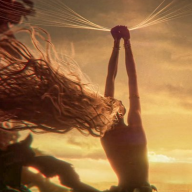
GTA VI — The Symphony of the New World
Exclusive interview with Rob Nelson, Head of Development at Rockstar Games
This summer,
Trois Couleurs was the only French-language media outlet able to visit the place where the most anticipated video game of the decade is being developed. At Rockstar North in Scotland,
Grand Theft Auto VI, the latest entry in a series that has become a major part of contemporary pop culture, was undergoing its final adjustments. Rob Nelson, the studio's head of development and creative mastermind, showed us around, controller in hand, through this new world, which will be released on
November 19.
In principle, nobody goes in here. Especially not at a time when every social network is abuzz at the slightest image, based on which people make plans about the comet for days on end. Not long ago, the release of a video showing someone using the editor tool caused enough of a stir among gamers to make the filmmakers mentioned on page 50 jealous. Musicians, graphic artists, designers… behind the scenes, the sixth installment of one of the most important works of contemporary pop culture is taking shape:
Grand Theft Auto, which follows the adventures of criminals in fictional American cities.
The team welcoming us at Rockstar North explains that the number of people we will actually see is extremely limited. The studio is perhaps the best-known development studio in the Rockstar Games group. Located in Edinburgh, this elegant cathedral-like building overlooks the Scottish Parliament and is located a stone's throw from the cliffs of Salisbury Crags. It is here that the monuments from
Red Dead Redemption and
GTA were developed.
The idea is therefore to keep visits short and controlled, especially since one never quite knows what might happen. The atmosphere in the premises is studious, the décor is minimalist, with few personal touches. Rob Nelson, Head of Development of
GTAVI, is certainly the busiest man in the world, but does not show it as he launches the afternoon's program: I am going to see a thirty-minute montage of representative sequences from the game, then we will have an interview, before he puts the controller in my hands.
Excitement is therefore at its peak, concentration too. Eyes fixed on the screen coming to life, I almost do not even think of touching the coffee someone has gently placed on the low table in front of me.
A New World
I can sense that the Rockstar employees in the room are scrutinizing my reactions, but it is impossible for me to keep a poker face. My mouth is open and my eyes widen as I rediscover Lucia and Jason, the heroes of
GTAVI, who have now become old acquaintances after the two trailers and the hundreds of millions of views.
The camera glides over an even larger and more detailed fictional version of Vice City, inspired by Miami. The technical mastery is astounding, and at times it is difficult to know whether what we are looking at is a scene from the game or footage from a film set: the acting, camera movement, right down to the subtle optical effects. The music accompanying these chase sequences and gunfights has a groove that borrows as much from the flamboyant disco of Cerrone as from French Touch.
Between action scenes and more playful moments — car journeys, encounters with other central characters — the camera lingers on defining the contours of the story, within an eminently cinematic universe that immediately feels coherent and believable. At the heart of the story: two lovers who find themselves caught up in an escalating criminal spiral. At several points, mixing road trips, robberies, and shootouts, the characters, marginal and troubled, seem to dream of faraway horizons.
Everything is elevated by a cheerful satire of the entertainment industry and the information that Rockstar has perfected. What stands out is that this is the story of a couple. That romantic complicity involves emotionally driven missions, as well as the mundane tasks of daily life.
After a few minutes spent walking Lucia and Jason hand in hand through the animation of the two characters — as gripping as it is fluid — during a supermarket robbery, everything suddenly takes on another dimension. You could lead one without fearing that the other might suddenly turn against you.
In short, what I have just seen of
GTAVI is not merely a more ambitious version of what Rockstar Games had previously done: it is even better.
"We chose a duo, a Bonnie-and-Clyde-style couple."
What was the first image that came to mind when you first thought about the game?
The thing is, there are so many of us thinking together about how these games are made, and we probably had different images in mind at first, but we all put a lot of effort into the creative direction.
It may have been an image, but very often it is a song that everyone comes together around. Then everything develops gradually. There can be ideas influenced by a work of fiction, a film, something from a documentary — but the image gradually forms as we move forward.
The very first thing we did systematically, once we had decided where we wanted to place the game, was to go there ourselves. We went out on the road more or less randomly just to soak up the place.
At first, we have almost no subjects; just a handful of people. We take a huge number of photos, we let people draw us toward what they show us, we try to see what speaks to us.
Then we begin discussing it, sharing our ideas about what we want to include in the game and, after that, we return with a much larger team and start meeting different consultants who give us a bit of everything.
That is how we gradually build the universe.
"We ask ourselves what will stand the test of time."
How is the general movement of your world created? Do you first establish the map, then say: "OK, this or that should go in this area," and then build a story around it?
We usually begin by determining the place where it is going to happen, and we go there — in this case, Florida, and Miami in particular. Then we ask ourselves: which specific areas do we want to include?
We wanted the Everglades, we wanted certain towns on the outskirts of Miami. Obviously, we were going to include Miami.
Then, which aspects of that city do we want to emphasize? Which kinds of people and places do we want to include?
We think about the physical shape of the map and determine the sectors where these elements will be located. They are roughly positioned in the same places geographically as in the real world.
Then the team selects certain things we want to emphasize. So we get an enormous diversity of realism.
We generally know which areas should be integrated into the map, and then our scriptwriters begin thinking about all of that to create characters who can move across the largest possible variety of places.
What can take them into the Everglades? What can make an incredible family live in the middle of a drug dealer's home during a police raid? What can take them into very upper-class bars in Miami?
You need glamor and its opposite. Which character can take you into all these environments while remaining relevant to each one?
It is not purely about the story and the characters; they are guided through this world.
Once we have that, we establish the broad strokes. We need to represent this part of society or culture, and then Rupert [Humphries, Senior Vice President of Narrative] starts writing.
Then the page becomes a kind of outline that says: here we are, this is how it starts, and here is the situation. This is what could happen there.
Then they realize that things here and there happen, and gradually the story develops.
We gather quite a lot of information during our research. That is very useful in providing context for scenes.
How much of the story is already written at that stage?
We know the major story beats. We know certain key events we want to reach, but there is a lot that evolves during development.
You begin with an outline, and then, as the missions are built, the writers realize that certain things work better than others. Sometimes a character who was supposed to play a minor role becomes more important, because everyone enjoys them.
We build in layers, observing what works and what does not.
The biggest novelty is that this time you are immersing us in the intimacy of a duo.
We had also explored this relationship-protagonist idea back in
Grand Theft Auto V. We always look at previous games and ask how we can take things further.
In
GTA V, we had three protagonists, which were very different from one another, while still being linked together.
Then we made
Red Dead Redemption II, which told the story of one hero, Arthur, and we were a little worried there would not be enough depth with just one protagonist.
What we discovered was that we could instead spend a lot more time deepening that one character, and players could immerse themselves more deeply in that person's journey.
I think everything we learned narratively with Arthur, the way morality and honor could change depending on how you played, had a huge impact on us.
Players also really liked that aspect.
So we wanted to take the depth we had given
Red Dead Redemption II and apply it in a meaningful way, but also keep that emotional connection players developed with Arthur.
We asked ourselves whether there was another way to bring that into the
GTA saga.
We came back to the idea of several protagonists and continued working on that idea.
We explored different possibilities, but we were finally drawn to a duo, a partnership. And if it was going to be a couple, they had the possibility of becoming whatever the player wanted them to become.
It is therefore a Bonnie-and-Clyde-style couple.
As soon as we thought of that, it seemed obvious.
I really like the scene with the small details in their apartment, when they are preparing to go out to dinner. That intimate dimension involves more emotion.
We were afraid we would have to add a kind of arbitrary emotional dimension to justify the relationship, but this was something I really did not want in
GTA VI.
The reality is that they were already attached to each other, but I did not have to add emotional scenes to prove it.
When you see Lucia come down the stairs, then Jason move toward her and you hear more than just simple dialogue, that creates a feeling of unease.
We wanted to play with those sorts of ideas, but also with moments that are calm, such as when you see them in the apartment — moments that many people can identify with.
Everyone knows that situation of waiting for someone to finish getting ready, wondering: "Do I have to follow them through the door or hurry?"
We do not want to force that relationship on players.
The actors are very convincing
I remember the moment they came out of the game and took the controller themselves...
Everything is created with full performance capture. We were able to watch the actors work in a set.
We construct scenery similar to what we would build on any motion-capture stage. It is therefore a complete performance.
We can tell long stories, sometimes with multiple branching paths, and you can live your own moment.
That is something we are very interested in: this semi-interactive dimension.
You always make games that reflect our societies. During the production process of this one, which lasted several years, the world changed enormously: the #MeToo movement, the Covid pandemic, terrorist attacks in Europe, wars in the Middle East… Did you look at all of that and ask yourselves whether you were going to integrate it into the game or whether you would continue moving forward as planned?
That is a very interesting question.
We work on very long development cycles. The development of
GTA VI, I would say, has matured over a very long time.
The majority of the team started really working on it after
Red Dead Redemption II, in 2018.
We therefore have to be careful with what we decide to integrate, because it will take a lot of time to determine what should be adopted.
Time passes, we write, cast, film and integrate things into the game, which can easily take months. Some ideas can already be outdated by then.
So we always ask ourselves what will stand the test of time.
We observe all of this, but we do not necessarily try to capture things that are trendy at that precise moment.
There will always be absurd situations and behaviors among people that can inspire us, but we simply want to be careful not to overdo it.
I just replayed GTA IV for a few hours before coming here: it is still very current, at least in the way it depicts...
I also replayed
GTA IV for similar reasons, and I got the same feeling.
There are lots of little time capsules from that era, that sort of thing, but there are also absurd human behaviors, and I hope that in ten or twenty years, playing this game will give people the impression of returning to that era.
That matters to me.
But I also hope that when you return, the game will not be specifically tied to something that will no longer exist at all.
You will say instead: "Oh yes, I remember those influencers, those streamers, all those stupid things they did back then."
Maybe they will still do things like that, or maybe the world will have moved on to something else — we do not know.
But I think they represent both that era and the absurdity of human behavior specific to our time.
And that will be well represented in this game.
"We've seen a lot of gameplay sequences"
You briefly controlled one of the different playable characters — driving and gunfights, but also diving and muscle-training sessions...
There is an enormous number of things to do, and many different ways of doing them. It is also an experience that is enjoyable to watch.
The level of interactivity in this game is higher than in
GTAV, and even than in
Red Dead Redemption II.
There are game elements that will appeal to players who enjoy this kind of thing.
The boards, for example, are places that feel truly alive.
Camera management, especially during seamless transitions from an open environment such as a street to something narrower like a staircase cage, is particularly convincing.
That goes beyond what you could do with cinema-style camera objectives.
The scene where they enter the elevator comes directly from gameplay.
We try constantly to improve the transition between moments when the player is in control and those when we switch to a cinematic form or close-up shot.
We want that shift to happen in a natural and invisible way, so that the game almost never stops.
Cinematic moments and gameplay
In your productions, the most cinematic sequences are often found in the cutscenes. Do you really have the feeling of playing yourself during the most impressive moments?
It has been a very long time since we began working on this.
I think it probably started with
GTA IV and
Grand Theft Auto: Episodes from Liberty City, then with the transition to
Red Dead Redemption.
At that time, we began asking ourselves how to remove the black screen between gameplay and cinematic sequences.
It happened quickly, and then we ended up creating two different experiences: gameplay on one side and the cutscene on the other.
In early
Red Dead Redemption, older GTA titles and our other games more generally, cutscenes often took place inside buildings.
You arrived at a door, knocked, and then reappeared inside.
There would be a little conversation, then you would return outside. Or sometimes there was always a wall of black between the cinematic and the gameplay.
In
Red Dead Redemption, by contrast, you entered directly into the scene and then came back out.
Marston [the hero] would leave the scene, the camera would catch up with him, and everything would continue uninterrupted.
And we have never stopped pushing that idea further.
But by the end of
Red Dead Redemption, when Marston goes to confront his fate...
Toward the barn... [We will not spoil it — go play Red Dead Redemption.]
Yes.
I remember watching the first version of that preliminary cinematic and thinking it was perfect as a cinematic sequence.
And we thought: "This is what we should do — but it could be even more powerful if I, as the player, were the one aiming."
If we could leave control to the player, with their hands on the controller, that would completely change the scene.
Especially because it is such a desperate, doomed attempt.
We kept pushing in that direction right up until today.
In
Red Dead Redemption, we carried on much more reactively: once the motion capture was done and the scene had been edited, we said to ourselves that maybe it would be possible to take a part of it and return control to the player.
In
Red Dead Redemption II, we directly designed some sequences in that way, such as when the gang goes to rescue Jack.
You have partial control during that sequence.
We could have made it a cutscene, but we thought it would be more powerful if you were walking with the gang.
You cannot split away or do whatever you want, but you do the walking, and when Jason is in the conference room with the guy named Andres and he picks up the bat on the table, you have some control: you can move forward and backward, the camera tightens, but you do not have full control, and it is not a cinematic sequence.
We are constantly testing the boundary.
Visual style
Graphically, the style of your productions is not really aimed at photorealism. There is something very anchored in comic books, and I think that is precisely what allows the universe to age without becoming an uncanny valley.
I agree.
Sometimes people talk to us about the uncanny valley effect, and I avoid using images or objects that look hyper-photorealistic, for example.
Yes, that is something we talk about quite a lot.
We want to remain on the edge of that frontier, and we know it is necessary.
As technology improves, the possibility of creating something very realistic grows as well.
It needs to be the most beautiful thing possible, obviously — but there must also be its own angle.
It needs its own style, but that cannot be entirely realistic, and that is not our objective.
The same thing applies to gameplay: the goal is not to be realistic, but to give an impression of realism and stay coherent with what we are doing, without moving entirely into rhythm or abstraction.
"Twice the size of Los Santos"
Jason gets on a scooter. As a joke, I suggest putting on a helmet.
No problem — they thought of everything: "You just have to press this button."
The city gradually disappears as we drive, and we escape.
Rob explains the game mechanics in detail:
"At that point, they know what I am dressed like. But if I am in a car and they do not see my face, I should be able to get past a police roadblock, right, without being detected. The police system is much more intelligent, and the mechanics are more sophisticated than in
GTAV."
"If you are careful and you see a police officer turning around, it is entirely possible to escape them."
"And that reinforces the story, because the story revolves around a couple on the run."
"You can perhaps try your luck or be more cautious."
"You can, in a sense, choose the kind of criminal you want to be."
"Someone more professional, or on the contrary someone totally unpredictable."
"The way you play can have an impact on certain things."
Likewise, he explains that the way Lucia and Jason behave toward each other will have an effect on their relationship.
Do they spend time together?
The role-playing and customization aspect is important.
The world is also much less predictable.
You are not the only armed person nor the only one capable of violence.
"Was it worth more than a decade of waiting? Absolutely."
Rob hands me the controller and invites me to explore the game.
For half an hour, he will regularly give me small hints and comments, as another collaborator nearby does as well.
There is no shortage of details: ice cubes — a gesture of affection perhaps taken too far between the two protagonists — facial expressions and behavior in contact with a car...
I can see craftsmen carefully refining their masterpiece live.
It is also fascinating that the show being played before us is not being shown as a fixed presentation. They are literally playing the game live.
We find Jason in his apartment again, and I follow him through the streets of Vice City, populated by an astonishing number of characters, each one notable for the finesse of their character design and richness of interaction with them and with our heroes.
You may wonder whether I have gone a little too far: I definitely destroyed a waiting queue at a fast-food restaurant.
I had the same feeling as after that presentation session showing the first minutes of
Avatar by James Cameron in 2009.
It is so technically accomplished that it immediately becomes a new standard, a technical high point.
You almost stop thinking about each individual detail — the sand on the shoes, sweat on the skin after a sprint, the way aquatic plants float — and simply focus on what can happen on the screen.
After having had a brief conversation with some residents in goggles and thongs at the beach, we head up to a luxurious villa where people in bikinis grill meat on a barbecue.
We do not stay long; cops arrive, police cars and helicopters.
During our eventful walk, we rob two clothing shops and nothing ever happens in the same way: shopkeepers react, customers intervene, the police respond...
"All situations are open. You never know what will happen," Rob sums up.
The sun disappears over the horizon, giving us time to mention the humorous side of their games, including satire of the media and other communication channels.
"There are an enormous number of people working on all sorts of things: brands, billboards, television shows... A large part of it is based on trial and error. For every small thing in the media in particular, we constantly ask ourselves: 'Does this work?'"
"The team comes up with an enormous number of ideas, then we try to see what works."
In
GTA IV, the internet ads were particularly interesting: burgers made of 38 steaks, streamers doing live challenges while locked in the trunk of a car.
Here too, we will have some.
Night falls on our campaign.
We are surrounded by calming greenery.
The flashy swimsuits of Vice City are already far away.
A new world opens up before us.
"Vice City is twice the size of Los Santos"
Rob specifies that
GTAVI takes place in our present day.
Then he asks me where I want to go.
"Can you show me nature, the countryside?"
He opens the map.
It is huge.
"Vice City is twice the size of Los Santos [the main city in GTA V]. But in terms of cities and urban zones on the outskirts, there is the equivalent of eleven times what you could find in GTA V, if you count all the small towns that you can discover."
"You start at the bottom of the map, in the Keys, during the first part of the game. That is where the little house belonging to Jason that you see in the second trailer is located."
"Then the game opens up completely, and you can go anywhere, at any time."
And as for buildings?
"You can enter many buildings. A lot of them. The number is enormous."
Among the small features that enrich after-the-fact gameplay, I can mention a jumble of things: a visit to the hairdresser, where you can customize your avatar endlessly, browsing a social network integrated into the game, basketball courts above the shops — just for fun...
The immersive potential is enormous.
We now play as Lucia.
The couple drives off for a campaign trip.
We take a road we had used a little earlier.
Traffic is much heavier.
"Normal, it's the end of the day," Rob tells me.
At the end of an exit ramp, they thought of everything.
Along the way, we stop to watch people BASE jumping from a bridge.
They challenge us to do the same.
Lucia and Jason jump hand in hand.
It is a trap.
We actually needed to steal the car.
"There are lots of emergent events that can change the course of things," all while looking for a new vehicle.
I am surprised that I did not see the scenery change.
We have imperceptibly moved from the heart of Vice City to a suburban zone, then to agricultural countryside, without needing a loading screen.
We drive a lot in the game.
And there is always some kind of conversation during journeys — in
Red Dead Redemption, it is on horseback rather than in a car.
It is an excellent way for us to convey more narrative information and slip it discreetly into those moments.
Once again, probably for the same reason: in a cinematic sequence, that could seem less believable, forced or artificial.
A huge technical challenge
This was particularly difficult on
Red Dead, because the map was smaller while still containing an enormous number of different regions and biomes to cross, and everything had to blend naturally from one into another.
The technical team improves on this with every game.
It manages to create something that feels natural without actually reproducing the real world one-to-one.
Among the technical feats behind this universe, we should also mention reflections — mirrors, shop windows, puddles — which always represent a challenge in this genre.
Or even crowd management, the depth of field when moving toward a sunset: every leaf seems composed of a clever interweaving of blur and sharpness, allowing exactly the right amount of shadow and light through so that the illusion is total.
The world after GTA VI
The article ends with Rob Nelson reflecting on what he hopes people will remember:
"I hope that, in ten years, playing this game will feel like returning to our era."
He says he would be very happy if people remembered these games a century from now.
He imagines that he would like them to look back on them in a way similar to looking through an old photograph — remembering what people wore, what daily life looked like, and recognizing elements of that era.
Not necessarily because every specific detail of the world will still exist, but because the game captures both the culture and the human absurdities of its time.
"What do we ask ourselves? What will stand the test of time?"
And his answer to whether the wait was worth it:
"Was it worth more than a decade of waiting? Absolutely."