Alert Topic Politico | Leggere primo post prima di intervenire

  • Autore discussione Autore discussione Staff
  • Data d'inizio Data d'inizio

Per chi avete votato?

  • Fratelli d'Italia

    Voti: 17 14.2%
  • Lega

    Voti: 6 5.0%
  • Forza Italia

    Voti: 2 1.7%
  • Partito Democratico

    Voti: 14 11.7%
  • Europa Verde - Sinistra Italiana

    Voti: 9 7.5%
  • +Europa

    Voti: 8 6.7%
  • Movimento 5 Stelle

    Voti: 23 19.2%
  • Azione - Italia Viva

    Voti: 10 8.3%
  • Italexit

    Voti: 3 2.5%
  • Italia Sovrana e Popolare

    Voti: 9 7.5%
  • Unione Popolare

    Voti: 4 3.3%
  • Scheda bianca

    Voti: 13 10.8%
  • Altro

    Voti: 10 8.3%

  • Votatori totali
    120
Stiamo tenendo d'occhio questa discussione e alcuni utenti da un po' di tempo, perchè spesso vediamo toni e termini che vanno oltre, troppo.
Vi ricordiamo che parlare di Politica (e dintorni), su questa piattaforma, è una concessione dei proprietari della Stessa, e non un obbligo. Questa community è parte di un circuito che si occupa di Videogiochi e Intrattenimento, ve lo ricordo.

Quindi gentilmente abbassate i torni e i termini, offese più o meno velate, termini offensivi, provocazioni eccetera.
Le opinioni ci stanno e le polemiche anche, sono il sale delle discussionim non sono quelle il problema, ma non si accetteranno più offese alle persone, di qualsiasi tipo, ad utenti o staff è uguale.

Quindi, per non chiudere tutto e salvaguardare la maggioranza SANA, Il prossimo che offende si becca un oscuramento di 2 mesi (a salire) per direttissima. E se vedremo più utenti non attenersi al Warning, prenderemo in considerazione la decisione drastica di bannare certi argomenti dal Forum.

Buon proseguimento



Pagliacci affetti da sindrome del Marchese del Grillo ne abbiamo? :asd:
 
Mandante a sia insaputa :rickds:

 
Breve storia dei fallimenti e delle conseguenze disastrose che hanno causato i tentativi di invasione, cambi di regime e sopraffazione coloniale degli Usa.

….
But whether covert or overt, any attempt at regime change in Venezuela will face formidable challenges. Covert methods fail far more often than they succeed, and it is unlikely that threats of force or airstrikes will successfully pressure Maduro to flee. And even if Washington were to succeed in ousting Maduro, the longer-term game of regime change would still be risky. Historically, the aftermaths of such operations have been chaotic and violent.
….
But even if Trump had preserved secrecy, the United States’ history of covert interventions offers little reason for optimism. Washington could offer clandestine support to local armed dissidents, try to assassinate Maduro, or instigate a coup against his regime. Yet each tactic carries a poor track record. A 2018 study by one of us (O’Rourke), analyzing 64 U.S.-backed covert regime change attempts during the Cold War, found that efforts to support foreign dissidents succeeded in toppling the target regime in only about ten percent of cases. Assassination efforts have fared no better. Washington’s intentional attempts at covert killings of foreign leaders—most notoriously Cuban leader Fidel Castro—repeatedly failed, although a few leaders, such as South Vietnam’s Ngo Dinh Diem in 1963, were killed during U.S.-backed coups without U.S. approval. Fomenting coups has proved more effective at bringing U.S.-backed forces to power, including in Iran, in 1953, and Guatemala, in 1954. But neither outcome led to long-term stability. And Maduro has so thoroughly coup-proofed the Venezuelan armed forces that this option appears less viable.

Some of these tactics have even been tested in Venezuela before—and failed. In 2019, the United States recognized the opposition leader Juan Guaidó as Venezuela’s interim president and backed a popular uprising against the Maduro regime. But the attempt collapsed when Maduro’s military refused to defect. The following year, a group of about 60 Venezuelan dissidents and a few American contractors launched a botched amphibious incursion to storm the capital and capture Maduro, called “Operation Gideon.” It was swiftly intercepted by Venezuelan security forces.

History shows that failed covert regime changes usually make a bad situation even worse. Relations between the intervening actor and its target go downhill, and as we have found in our research, militarized clashes between them become more likely. In the target state, such attempts tend to trigger violence, including civil war, and increase the risk that the regime kills masses of civilians.

The United States has long conducted covert interventions in other countries’ domestic politics—in Afghanistan, Albania, and Angola, to name just a few. But this pattern was especially pronounced in Latin America, where Washington attempted at least 18 covert regime changes during the Cold War. In 1954, it overthrew Guatemala’s democratically elected government, ushering in a military regime that rounded up thousands of opponents and presided over a 36-year civil war that killed an estimated 200,000 people. In 1961, the United States backed the failed Bay of Pigs invasion of Cuba and launched a coup in the Dominican Republic that unintentionally provoked the assassination of the dictator Rafael Trujillo. After Trujillo’s son seized power instead of the U.S.-backed coup plotters, Washington forced him into exile and continued to meddle in Dominican elections—as well as those in Bolivia and Guyana—throughout the 1960s. It also supported coups in Brazil in 1964, Bolivia in 1971, and Chile in 1973, and funded the Contra rebels in Nicaragua throughout the 1980s.

Yet not one of these operations produced a stable, pro-American democracy. More often, U.S. interventions installed authoritarian regimes or triggered cycles of repression and violence. Even when Washington found a staunch anticommunist ally, such as Augusto Pinochet in Chile, relations eventually soured over the regime’s brutality and human rights abuses. More broadly, the public exposure of Washington’s role in these covert operations fueled deep and lasting anti-Americanism that continues to haunt U.S. policymaking in the region. Indeed, Maduro regularly invokes this history to portray current U.S. pressure as a continuation of Washington’s imperialist past.
...


Ma "La Verità" nel senso della carta igienica che vendono in edicola o del giornaletto anti-propaganda che si vede in The Running Man? :trollface:
 
Beh ragazzi ha confermato lui stesso le dichiarazioni il giorno dopo, poi ognuno gli può dare il peso che vuole ci mancherebbe.
 

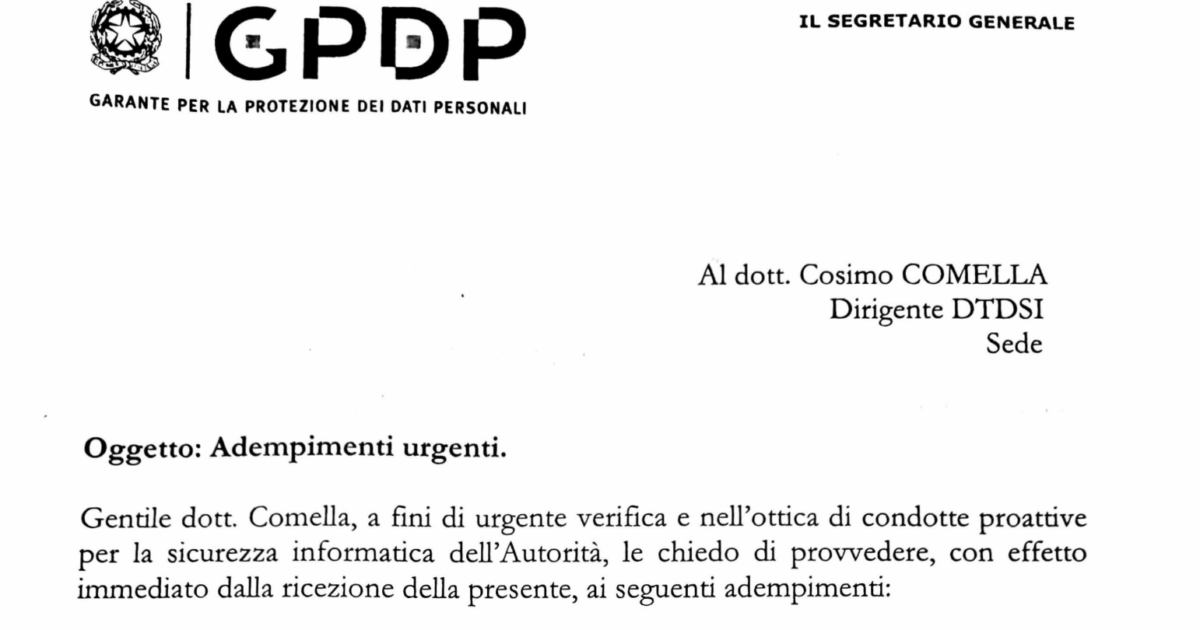
Complimenti, il collegio del Garante della Privacy voleva spiare i propri dipendenti per capire chi avesse dato informazioni ai giornalisti e in particolare a Report.

Infatti, se vi ricordate:

L'intero collegio è stato sfiduciato ALL'UNANIMITÀ dai propri dipendenti in assemblea e non intendono dimettersi, COMPLIMENTI! 👏👏👏

 
The Office Lol GIF


Pubblicità
Pubblicità
Indietro
Top