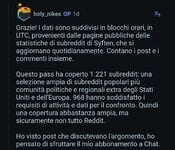
Indipendentemente da quanto accaduto con i data center di Yandex, né la guerra ibrida, né le ingerenze russe, né il supporto ad AfD, né i bot social sono "imaginary" (come li definisce il profilo Laz che ha risposto a Marco Lombardo) e la stessa CeMAS che hai preso a riferimento nell'altro post e monitora l'operazione Doppelganger scrive:
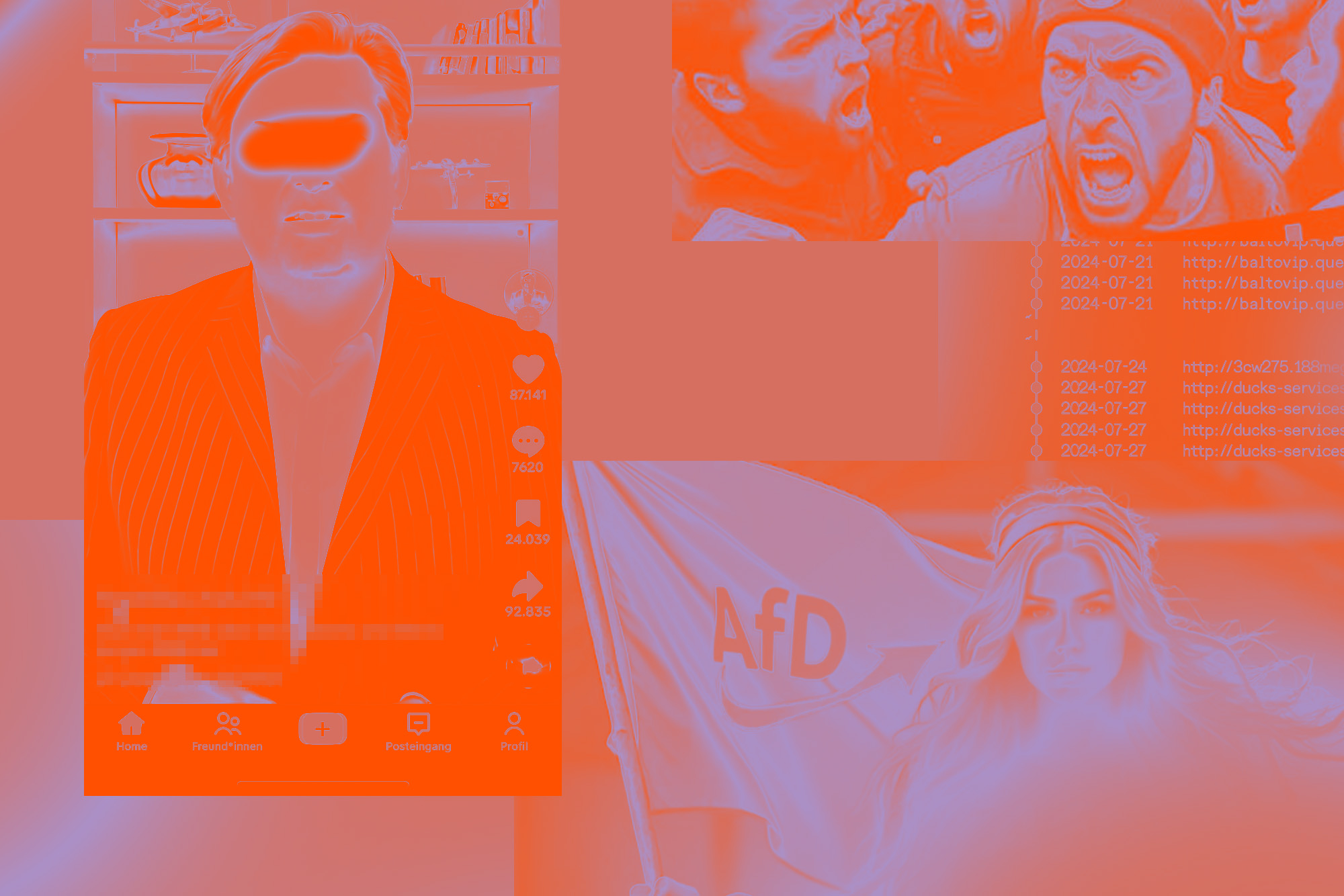
At least four Russian actors and campaigns attempted to influence public opinion in Germany before the federal election. The Doppelganger campaign continued to post links to websites impersonating established media outlets on X, with the 1,374 posts documented by CeMAS reaching 5.1 million views based on the platform’s metrics. The disinformation actor Storm-1516, which had previously been more active in the United States, interfered in the German election campaign with false documents and AI-manipulated videos. Similar content was disseminated by the associated Russian organization Foundation to Battle Injustice (R-FBI). Combined, Storm-1516 and R-FBI achieved at least 23 million views on X, Facebook, Instagram, TikTok and Telegram. Another pro-Kremlin network of inauthen-tic accounts on X used short videos, quote tiles and hijacking of popular hashtags to spread pro-Russian narratives on the Russian war against Ukraine
support the AfD (Alternative for Germany) and the BSW (Sahra Wagenknecht Alliance).
For the first time, Doppelganger placed a stronger focus on discrediting the CDU (Christian Democratic Union). While the campaign had previously targeted the parties of Germany’s “traffic light” coalition
1, it attacked the Greens, the SPD (Social Democratic Party of Germany), and for the first time also the CDU on a larger scale in the run-up to the 2025 federal elec-tion. It blamed the Greens for economic woes while accusing Chancellor Olaf Scholz of supporting Ukraine to the detriment of Germany. The cam-paign aimed to portray the CDU as untrustworthy and its chancellor can-didate Friedrich Merz as being too close to business. In doing so, Doppel-ganger accounts pushed contradictory narratives: Merz was accused of having a leadership style that was at once too weak and too authoritarian. Mentioning the AfD, the actors behind the campaign made a mistake re-vealing its Russian origins: Instead of the German abbreviation AfD, they twice used the Russian abbreviation ADG (Alternativa Dlya Germanii).
o
False claims regarding the integrity of the federal election have received millions of views on social media platforms. CeMAS documented the 221 posts with the highest reach containing such false claims on X, YouTube, Facebook, Instagram and Telegram between November 6, 2024 (the dis-solution of the traffic light coalition) and March 2, 2025 (one week after
1 The “traffic light” coalition is a nickname for the German federal government which was formed in 2021 and con-sisted of SPD (party colour: red), the FDP (party colour: yellow) and the Green Party.
5
election day). Together, these achieved a total of 10.6 million views.
The most common false claim was that the election would be annulled in the event of an AfD victory (93 posts, 5.3 million views). Other narratives fo-cused on alleged election manipulation, e.g. due to a supposed discrep-ancy between the provisional election results reported by the Federal Re-turning Officer and the results on websites of individual municipalities,
the alleged destruction of ballot papers with AfD votes in Hamburg, or the al-leged absence of the party on ballot papers in Leipzig.
o
TikTok and X were strategically relevant platforms for AfD campaign com-munication – with different results. AfD accounts shared at least 44,000 posts on X and 5,700 videos on TikTok between November 2024 and Feb-ruary 2025. Their videos on TikTok achieved on average four times as much engagement in the form of likes, shares and comments as posts on X. The accumulated number of likes of all AfD posts remained similarly high across the two platforms and significantly increased during the election campaign: While the AfD accounts generated around 700,000 likes per week on TikTok and X in November, the corresponding figures were 2.2 million (X) and 2.6 million (TikTok) during the week of the election.
o
The majority of actors from the far-right and conspiracy-ideological milieu on Telegram supported the AfD. Channels and groups within the scene sharply criticized the traffic light coalition, stoked fears of further inflation or immigration, and spread conspiracy narratives concerning the so-called "deep state". The sources they shared included both established journal-istic media such as BILD (around 43,000 mentions), Die Welt (17,000), and the Berliner Zeitung (12,500), as well as alternative media such as Apollo News (24,500), AUF1 (13,000) and Nius (13,000). Elon Musk's X account was shared in at least 592 conspiracy-ideological or far-right groups and channels, making it the most shared source from X.
o
The AfD used AI-generated images as an election campaigning tool, albeit to a so far limited extent. 6.5 percent of the examined images in AfD posts on X contained AI-generated elements, which were, however, increasingly used to represent current events and construct images of political ene-mies. In 47 percent of cases, they contained attack narratives, primarily against democratic parties and migrants. Around 22 percent of the images glorified the AfD party or its representatives and around 16 percent used victim narratives, e.g. depicting Germany as a victim of migrant violence. The use of AI was only explicitly labelled as such in 25 percent of cases. 71 percent of the AI images used by the AfD were photorealistic, making it possible to deceive and manipulate viewers.
The report "Authoritarian Strategies Online: Analysing and Monitoring of Digital Risks during the German Federal Election 2025" looks at anti-democratic influence campaigns around the February 2025 election in Germany. It looks at both foreign influence campaigns and far-right milieus.

cemas.io